
Publications
Studies using RipSeq pathogen ID
Articles and posters about RipSeq, with product sheets and protocols. Search by title, author, journal or year. If you have any questions, please contact us.
Essential Study
Four studies, about two minutes each
Targeted NGS in routine practice at Mayo Clinic
Read the paper
16S massive parallel sequencing of brain abscesses
Read the paper
Direct 16S sequencing of polybacterial samples
Read the paperSummaries by Pathogenomix. See each article for full methods, results and disclosures.
20261 entry
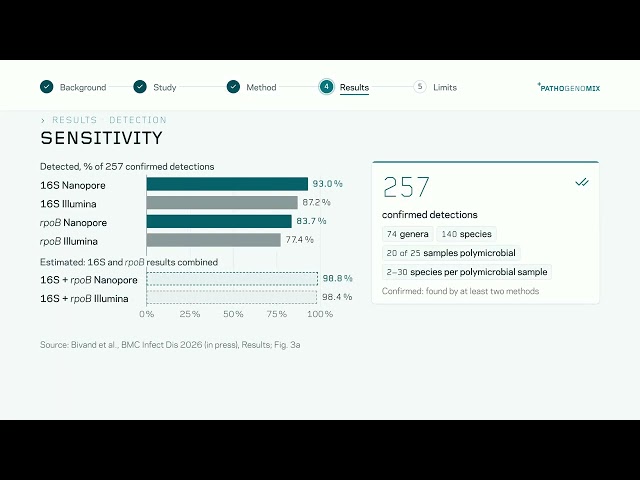
Bacterial identification in clinical samples – comparing Nanopore and Illumina sequencing of the 16S rRNA and rpoB genes
Joanna Małgorzata Bivand, Audun Sivertsen, Marit Gjerde Tellevik, Oystein Saebo, Robin Patel, Ruben Dyrhovden & Øyvind Kommedal
In a mock community and 25 abdominal abscess samples, Nanopore sequencing of the 16S rRNA and rpoB genes combined reached 98.8% sensitivity with 89% species-level discrimination, paralleling Illumina.
20251 entry
Nanopore sequencing of bacterial rpoB and 16S rRNA gene amplicons for infectious disease diagnostics
Joanna Malgorzata Bivand, Audun Sivertsen, Marit Gjerde Tellevik, Øyvind Kommedal
Poster: Nanopore sequencing of five polymicrobial samples and a mock community, analyzed in RipSeq, gave species-level identification in 94% with rpoB and 78% with the 16S rRNA gene.
20243 entries
Microbiological diagnosis of pleural infections: a comparative evaluation of a novel syndromic real-time PCR panel
Øyvind Kommedal, Tomas Mikal Eagan, Øystein Fløtten, Truls Michael Leegaard, William Siljan, Hilde Fardal, Bjørnar Bø, Fredrik Grøvan, Kjersti Wik Larssen, Arne Kildahl-Andersen, Reidar Hjetland, Rune Tilseth, Sølvi Kristine Øyen Hareide,Marit Tellevik, Ruben Dyrhovden A
A syndromic PCR panel confirmed community-acquired pleural infection in 107 of 109 cases, against 109 for 16S targeted NGS and 54 for culture.
The Brief Case: Human leptospirosis acquired in Minnesota and diagnosed using 16S ribosomal RNA gene PCR/next-generation sequencing of blood
Myeongji Kim, Mark J. Enzler, Bobbi S. Pritt, Aaron C. Kumlien, Matthew J. Wolf, Elitza S. Theel, Andrew P. Norgan, Taylor Paisie, Robin Patel
Broad Range Eubacterial Polymerase Chain Reaction of Cerebrospinal Fluid Reduces the Time to Exclusion of and Costs Associated with Ventriculostomy-Related Infection in Hemorrhagic Stroke
Elisabeth Pietrzko, Stefan Bögli, Katja Frick, Sabeth Ebner-Dietler, Crescenzo Capone, Frank Imkamp, Hendrik Koliwer-Brandl, Nicolas Müller, Emanuela Keller & Giovanna Brandi
In patients with hemorrhagic stroke and a ventricular drain, broad-range PCR of cerebrospinal fluid shortened antibiotic treatment for suspected drain-related infection by almost 10 days, with comparable outcome at 3 months.
20237 entries
Diagnostic Yield of 16S Ribosomal Ribonucleic Acid Gene-Based Targeted Metagenomic Sequencing for Evaluation of Pleural Space Infection: A Prospective Study
Luis Gimenez-Miranda, MD, Bilal F. Samhouri, MD, Matthew J. Wolf, MS, Dagny K. Anderson, MD, David E. Midthun, MD, Kaiser G. Lim, MD, Ryan M. Kern, MD, Robin Patel, MD, Eva M. Carmona, MD, PhD
In pleural fluid from 47 patients, 20 had pleural space infection; targeted metagenomic sequencing was positive in 14 of them (70%) and culture in 7 (35%).
Pleural Empyema Caused by Streptococcus intermedius and Fusobacterium nucleatum: A Distinct Entity of Pleural Infections
Ruben Dyrhovden, Tomas Mikal Eagan, Øystein Fløtten, William Siljan, Truls Michael Leegaard, Bjørnar Bø, Hilde Fardal, Fredrik Grøvan, Arne Kildahl-Andersen, Kjersti Wik Larssen, Rune Tilseth, Reidar Hjetland, Sigbjørn Løes, Frode Lindemark, Marit Tellevik, Rebecca Breistein, Øyvind Kommedal
Of 77 community-acquired pleural infections characterized by NGS, 63 were oral-type, and Streptococcus intermedius and/or Fusobacterium nucleatum was a dominant component in all of those.
16S rRNA Gene PCR/Sequencing of Heart Valves for Diagnosis of Infective Endocarditis in Routine Clinical Practice
Hyo-Lim Hong, Laure Flurin, Kerryl E. Greenwood-Quaintance, Matthew J. Wolf, Bobbi S. Pritt, Andrew P. Norgan, Robin Patel
In 54 subjects whose heart valves were tested in routine practice, positivity was 75% for valve 16S rRNA gene PCR/sequencing and 55% for blood cultures; after prior antibiotics it was 76% and 11%.
The use of 16S rRNA targeted next generation sequencing in diagnostics of polymicrobial invasive infections
Advances in the Microbiological Diagnosis of Prosthetic Joint Infections
Maria Eugenia Portillo, Ignacio Sancho
Review of non-culture techniques for diagnosing prosthetic joint infection: PCR and sequencing methods, including NGS, and the conditions needed to detect fastidious organisms and rule out contaminants.
Complete genome sequence of a human bacteremia isolate of Kalamiella piersonii
Mondraya Howard, Joel J Maki, Sara Connelly, Dwight J Hardy, Andrew Cameron
Complete genome of a Kalamiella piersonii isolate from human bacteremia, assembled from short and long reads: a 3.93 Mb chromosome, three circular plasmids and one linear plasmid.
Clinical Significance of a 16S-rDNA Analysis of Heart Valves in Patients with Infective Endocarditis: a Retrospective Study
Gustav Johansson, Torgny Sunnerhagen, Sigurdur Ragnarsson, Magnus Rasmussen
In 279 endocarditis episodes with valve surgery, 16S rDNA PCR and sequencing of the valve was positive in 81% and valve culture in 22%; it gave a diagnostic benefit in 75% of blood culture-negative episodes.
202212 entries
Clinical Use of a 16S Ribosomal RNA Gene-Based Sanger and/or Next Generation Sequencing Assay to Test Preoperative Synovial Fluid for Periprosthetic Joint Infection Diagnosis
Laure Flurin, Joseph J Hemenway, Cody R Fisher, James J Vaillant, Marisa Azad, Matthew J Wolf, Kerryl E Greenwood-Quaintance, Matthew P Abdel, Robin Patel
In preoperative synovial fluid from 154 subjects, 16S sequencing (Sanger and/or NGS) had 69% sensitivity for periprosthetic joint infection and culture 72%; the two combined reached 83%.
Core Genome Multilocus Sequence Typing and Antibiotic Susceptibility Prediction from Whole-Genome Sequence Data of Multidrug-Resistant Pseudomonas aeruginosa Isolates
Scott A. Cunningham, Allison R. Eberly, Stephan Beisken, Andreas E. Posch, Audrey N. Schuetz, Robin Patel
For 38 multidrug-resistant Pseudomonas aeruginosa isolates, whole-genome typing showed nearly the same discriminatory power as PFGE, and predicted antibiotic susceptibility agreed with phenotypic results in 92.4% of 342 combinations.
Pathogen Detection in Infective Endocarditis Using Targeted Metagenomics on Whole Blood and Plasma: a Prospective Pilot Study
Laure Flurin, Matthew J. Wolf, Cody R. Fisher, Edison J. Cano Cevallos, James J. Vaillant, Bobbi S. Pritt, Daniel C. DeSimone, Robin Patel
Pilot study of 35 subjects with infective endocarditis: targeted metagenomic sequencing of whole blood and plasma was positive in 23 (66%), including 5 of 6 culture-negative cases.
Targeted Versus Shotgun Metagenomic Sequencing-based Detection of Microorganisms in Sonicate Fluid for Periprosthetic Joint Infection Diagnosis
Hyo-Lim Hong, Laure Flurin, Matthew J Thoendel, Matthew J Wolf, Matthew P Abdel, Kerryl E Greenwood-Quaintance, Robin Patel
In 395 sonicate fluids from failed hip and knee replacements, 16S targeted NGS performed like shotgun metagenomics (72.1% and 73.1% positive agreement) and detected potential pathogens in 48.0% of culture-negative infections.
Targeted Metagenomic Sequencing-based Approach Applied to 2146 Tissue and Body Fluid Samples in Routine Clinical Practice
Laure Flurin, Matthew J Wolf, Melissa M Mutchler, Matthew L Daniels, Nancy L Wengenack, Robin Patel
In 2,146 tissue and body fluid samples tested in routine practice, adding NGS to Sanger sequencing of the 16S rRNA gene increased positive tests by 87%; clinical sensitivity was 53%, against 42% for culture.
Comparison of an automated DNA extraction and 16S rDNA real time PCR/sequencing diagnostic method using optimized reagents with culture during a 15-month study using specimens from sterile body sites
Over 15 months and 803 specimens from sterile body sites, 62 were positive by 16S rDNA real-time PCR and sequencing only; RipSeq was used to identify both species in mixed infections of two bacteria.
Involvement of Bacteria in the Pathological Changes Before Achilles Tendon Rupture: A Case Series Investigating 16S rDNA in 20 Consecutive Ruptures
In 20 consecutive Achilles tendon ruptures, 16S rDNA PCR and Sanger sequencing rarely found bacterial DNA, and what was found was likely contamination.
Nocardia beijingensis Isolated From an Adrenal Abscess in a Diabetic Host
Melissa Pender, Ninad Mehta, Blake D Hamilton, and Sankar Swaminathan
Case report: Nocardia beijingensis grown from an adrenal abscess in a man with poorly controlled type 2 diabetes, with a review of published cases in immunocompetent patients.
Evaluation of multi-sample 16S ribosomal DNA sequencing for the diagnosis of postoperative bone and joint infections during antimicrobial treatment
Katja Wallander, Martin Vondracek & Christian G. Giske
In 28 episodes of postoperative bone and joint infection under antimicrobial treatment, 16S rDNA sequencing identified the causative organism in 5 where cultures failed; several samples per patient helped rule out contaminants.
Comparison of an automated DNA extraction and 16S rDNA real time PCR/sequencing diagnostic method using optimized reagents with culture during a 15-month study using specimens from sterile body sites
Konrad Egli, Martin Risch, Lorenz Risch & Thomas Bodmer
Over 15 months and 803 specimens from sterile body sites, 62 were positive by 16S rDNA real-time PCR and sequencing only; RipSeq was used to identify both species in mixed infections of two bacteria.
Gastrointestinal colonization of extended-spectrum beta-lactamase-producing bacteria among children below five years of age hospitalized with fever in Dar es Salaam, Tanzania
Upendo O. Kibwanaa, Joel Manyahi, Helene Heitmann Sandnes, Bjørn Blomberg, Stephen E. Mshana, Nina Langeland, Sabrina J. Moyo
Among 200 children under five hospitalized with fever in Dar es Salaam, 56% carried ESBL-producing Enterobacteriaceae; carriage was 78.4% in children with bloodstream infection and 53.1% in those without.
Laboratory diagnosis of bacterial meningitis by direct detection, serotyping and Next Generation Sequencing: How 10 years of testing in New York State has evolved to improve laboratory diagnosis and public health
Ten years of molecular testing for bacterial meningitis in New York State: real-time PCR was positive in 223 of 831 specimens, and 16S rDNA Sanger sequencing identified bacteria in a further 24 of 146 PCR-negative cases.
20218 entries
Managing Contamination and Diverse Bacterial Loads in 16S rRNA Deep Sequencing of Clinical Samples: Implications of the Law of Small Numbers
Ruben Dyrhovden, Martin Rippin, Kjell Kåre Øvrebø, Randi M. Nygaard, Elling Ulvestad, Øyvind Kommedala
Describes how contaminant DNA behaves in 16S deep sequencing and proposes a sample-specific cutoff set by the most abundant contaminant species, tested on a mock community and bile from 41 patients.
Repeated bronchoscopy in health and obstructive lung disease: is the airway microbiome stable?
Rune Nielsen, Yaxin Xue, Inge Jonassen, Ingvild Haaland, Øyvind Kommedal, Harald G. Wiker, Christine Drengenes, Per S. Bakke & Tomas M. L. Eagan
Two bronchoscopies in 21 healthy controls and 41 patients with obstructive lung disease: the airway microbiota varied between examinations, but changed less within a person than between people.
Targeted next generation sequencing for elbow periprosthetic joint infection diagnosis
Laure Flurin, Matthew J.Wolf, Kerryl E.Greenwood-Quaintance, Joaquin Sanchez-Sotelo, Robin Patel
In sonicate fluid from 47 infected and 58 non-infected elbow replacements, 16S targeted NGS had 85% sensitivity for periprosthetic joint infection and culture 77%.
Detection of Pathogenic Bacteria from Septic Patients Using 16S rRNA gene Targeted Metagenomic Sequencing
Mayo Clinic – Madiha Fida, Matthew J Wolf, Ahmed Hamdi, Prakhar Vijayvargiya, Zerelda Esquer Garrigos, Sarwat Khalil, Kerryl E Greenwood-Quaintance, Matthew J Thoendel, Robin Patel
In plasma from 60 patients with sepsis, 16S rRNA gene NGS was concordant with 11 of 19 positive blood cultures and detected a potential pathogen in 17 of the 41 remaining patients.
Characterization of abscesses from liver, pancreas and kidney using deep sequencing of the 16S rRNA gene
In 59 abscess samples from liver, pancreas and kidney, 16S deep sequencing made 227 bacterial identifications in 52 specimens, against 69 from the 44 specimens positive by culture.
Detection of Tick-Borne Bacteria from Whole Blood Using 16S Ribosomal RNA Gene PCR Followed by Next-Generation Sequencing
A 16S rRNA gene PCR with NGS for tick-borne bacteria in whole blood, using DPO primers and RipSeq NGS for the analysis, was concordant with targeted PCR in 31 of 32 samples.
Clinical Laboratory Perspective on Streptococcus halichoeri, an Unusual Nonhemolytic, Lancefield Group B Streptococcus Causing Human Infections
Three US cases of Streptococcus halichoeri bone and joint infection; the species can be misidentified as coagulase-negative staphylococci and is identified by MALDI-TOF MS or partial 16S rRNA sequencing.
Identification of Streptococcus dysgalactiae using matrix-assisted laser desorption/ionization-time of flight mass spectrometry; refining the database for improved identification
Removing three reference spectra from the Bruker MALDI-TOF library raised species-level identification of 217 Streptococcus dysgalactiae isolates from 62% to 94%.
20206 entries
Amplicon-Based Next-Generation Sequencing for Detection of Fungi in Formalin-Fixed, Paraffin-Embedded Tissues: Correlation with Histopathology and Clinical Applications
In 44 fungal stain-positive FFPE tissue specimens, ITS-targeted NGS was concordant with the histopathologic morphology in all 44, while fungal culture gave an identification in 27.3%.
Bacteria and fungi in acute cholecystitis. A prospective study comparing next generation sequencing to culture
In bile from 36 patients with acute cholecystitis, culture identified 40 (38%) of the 106 microbes found by deep sequencing of the 16S rRNA and rpoB genes and the fungal ITS2 segment.
A Case of Nodular Lymphangitis Inoculated From Soil
Tick-Borne Relapsing Fever Caused by Borrelia persica in Traveler to Central Asia, 2019
Case report: tick-borne relapsing fever in a traveler returning to Switzerland from central Asia, with Borrelia persica confirmed by shotgun metagenomic sequencing.
Bacteraemia with Moryella indoligenes and Fastidiosipila sanguinis: a case report
Case report: bacteremia with Moryella indoligenes and Fastidiosipila sanguinis, both identified by 16S rRNA gene sequencing.
Evaluation of direct 16S rRNA PCR from clinical samples for bacterial detection in normally sterile body sites
On 139 samples from normally sterile body sites, 16S rRNA PCR had 89.8% sensitivity and 85.6% specificity against culture and identified infections in 13 culture-negative samples; mixed chromatograms were analyzed with RipSeq Mixed.
201910 entries
Validation and Retrospective Clinical Evaluation of a Quantitative 16S rRNA Gene Metagenomic Sequencing Assay for Bacterial Pathogen Detection in Body Fluids.
A quantitative 16S rRNA gene metagenomic assay identified 34 species in 20 clinical samples, against 22 by culture; it matched culture in 15 samples and found at least one more species in five.
The bacterial aetiology of pleural empyema. A descriptive and comparative metagenomic study.
In pleural fluid from 64 patients with empyema, massive parallel sequencing of the 16S rRNA and rpoB genes yielded 385 bacterial detections; culture detected 38 (10%) and Sanger-based sequencing 87 (23%).
Bacteria and fungi in acute cholecystitis. A prospective study comparing next generation sequencing to culture.
In bile from 36 patients with acute cholecystitis, culture identified 40 (38%) of the 106 microbes found by deep sequencing of the 16S rRNA and rpoB genes and the fungal ITS2 segment.
Eikenella exigua sp. nov., isolated from brain abscess and blood
Describes Eikenella exigua, the first new species in the genus since 1972, isolated from a polymicrobial brain abscess and from a blood culture.
Comparison of Two Commercial Matrix-Assisted Laser Desorption/Ionization-Time of Flight Mass Spectrometry (MALDI-TOF MS) Systems for Identification of Nontuberculous Mycobacteria
Multicenter comparison on 244 nontuberculous mycobacteria isolates: Bruker Biotyper and bioMérieux VITEK MS identified 92% and 95% to at least the complex or group level.
Description and whole genome sequencing of Eikenella exigua sp. nov., isolated from brain abscess and blood
Describes Eikenella exigua, the first new species in the genus since 1972, isolated from a polymicrobial brain abscess and from a blood culture.
The use of broad-range bacterial PCR in the diagnosis of infectious diseases: a prospective cohort study
In 1,370 samples from primary sterile sites, broad-range PCR added diagnostic value over culture in 173, most often in heart valves and joint tissue; it also missed some culture findings, so parallel culture is needed.
Utility of Histologic and Histochemical Screening for 16S Ribosomal RNA Gene Sequencing of Formalin-Fixed, Paraffin-Embedded Tissue for Bacterial Endocarditis
16S rRNA gene sequencing of FFPE heart valve tissue identified a pathogen in 33 of 68 endocarditis cases with acute inflammation; organisms seen on Gram or GMS stain had the strongest association with a positive result.
High-throughput screening of bacterial pathogens in clinical specimens using 16S rDNA qPCR and fragment analysis
Two semiautomated workflows for 16S rDNA qPCR were evaluated on 499 clinical specimens; the results support the workflow with fragment analysis for rapid identification of bacterial pathogens.
Experiences from multiplex PCR diagnostics of faeces in hospitalised patients: clinical significance of Enteropathogenic Escherichia coli (EPEC) and culture negative campylobacter
In 291 hospitalized patients with diarrhea, a Campylobacter result that was PCR-positive but culture-negative, or an EPEC-only result, often had a non-infectious explanation.
20188 entries
Species Level Description of the Human Ileal Bacterial Microbiota.
16S massive parallel sequencing of ileal mucosa from 27 patients identified 280 OTUs; the microbiota of the distal ileum is oral-like and strikingly different from that of the colon.
Genomics of Corynebacterium striatum, an emerging multidrug-resistant pathogen of immunocompromised patients
Whole-genome sequencing of seven multidrug-resistant Corynebacterium striatum infections found a related cluster of three among lung transplant patients, and mobile elements carrying several resistance genes.
Revealing Microbial Population Complexity on Hospital Textiles Using DHPLC
Implants induce a new niche for microbiomes
Of 106 clinically uninfected implants, 66% were colonized by bacteria and 40% by fungi; the most prevalent microbes were not the common causes of implant infection.
Performance of VITEK® MS V3.0 for the Identification of Mycobacterium species from Patient Samples using Automated Liquid Media Systems
Vitek MS v3.0 correctly identified 99% of 383 seeded liquid cultures of mycobacteria and 87.7% of 73 smear-positive patient cultures to the species, complex or group level.
Molecular detection of fungal pathogens in clinical specimens by 18S rDNA high-throughput screening in comparison to ITS PCR and culture
In 233 specimens from patients with suspected fungal infection, 18S rDNA PCR and sequencing agreed with culture in 91% and with ITS PCR in 94%.
Evaluation of the Vitek MS v3.0 Matrix-Assisted Laser Desorption Ionization–Time of Flight Mass Spectrometry System for Identification of Mycobacterium and Nocardia species
Multicenter study of 963 Mycobacterium and Nocardia isolates: compared with DNA sequencing, Vitek MS v3.0 identified 69% to the species level and another 24% to the complex or group level.
Increasing Prevalence of Nontuberculous Mycobacteria in Respiratory Specimens from US-Affiliated Pacific Island Jurisdictions
In respiratory specimens submitted in Hawaii from 2007 to 2011, the rate of specimens with nontuberculous mycobacteria rose significantly, while M. tuberculosis showed no increase.
201713 entries
Bruk av massiv parallell sekvensering for påvisning og identifikasjon av mikrober i galle hos pasienter med akutt kolecystitt og akutt kolangitt (Thesis)
Microbiological Approach in Diagnosing Native and Heart Valves Prosthesis Infections
Contribution of PCR Denaturing Gradient Gel Electrophoresis Combined with Mixed Chromatogram Software Separation for Complex Urinary Sample Analysis
In 19 urinary catheter and urine samples with 84 OTUs, culture identified 37%, PCR-DGGE with Sanger sequencing 61%, and PCR-DGGE with RipSeq Mixed analysis of the chromatograms 88%.
Orbital cellulitis, subperiosteal abscess, subdural empyema, and superior sagittal sinus thrombosis: Intracranial complications of sinusitis caused by Streptococcus intermedius
A case of group G streptococcal endocarditis masquerading as acute rheumatic fever
Case report: group G streptococcal endocarditis in a previously healthy young man, first diagnosed as acute rheumatic fever before echocardiography.
First report of Sneathia sanguinegens together with Mycoplasma hominis in postpartum prosthetic valve infective endocarditis: a case report
Case report: Sneathia sanguinegens and Mycoplasma hominis detected together in a prosthetic heart valve by broad-range 16S rRNA PCR and sequencing, while culture remained negative.
Microbiological diagnosis of device-related biofilm infections
Mini review of how device-related biofilm infections are diagnosed, with the focus on prosthetic joint and cardiovascular device infections.
Helicobacter canis bacteraemia and cellulitis in a patient with end-stage renal disease
Case report: Helicobacter canis bacteremia and cellulitis in a hemodialysis patient, with the organism identified by 16S rRNA sequencing.
Comparison of two commercial broad-range PCR and sequencing assays for identification of bacteria in culture-negative clinical samples
On 76 culture-negative samples, the UMD SelectNA assay was positive in 22 and MicroSeq ID in 11; the more sensitive assay also found species judged to be contamination.
Contribution of sonicate-fluid cultures and broad-range PCR to microbiological diagnosis in vascular graft infections
In 22 patients with vascular graft infection, sonicate-fluid culture was positive in 79.2% and broad-range PCR of sonicate fluid in 66.7%, against 31.8% for intraoperative tissue cultures.
Aetiology and Significance of Hospital-Acquired Infections in Mexico
Review of hospital-acquired infections in Mexico, with emphasis on etiology, diagnosis and antimicrobial resistance.
Genotypic and Phenotypic Investigation of a Possible New Mycobacterium kansasii subspecies (Thesis)
Validation of a Clinical 16S Metagenomics Assay for the Identification of Bacterial Infections
Shaun Yang, PhD, D(ABMM), MLS(ASCP)CMMBCM
201612 entries
Emergence of mmpT5 Variants during Bedaquiline Treatment of Mycobacterium intracellulare Lung Disease
Of 13 patients given bedaquiline for Mycobacterium intracellulare lung disease, seven responded and then relapsed; isolates from all seven carried mutations in mmpT5.
High Prevalence of Faecal Carriage of ESBL-Producing Enterobacteriaceae among Children in Dar es Salaam, Tanzania
Among 603 children under two in Dar es Salaam, 34.3% carried ESBL-producing Enterobacteriaceae: 50.4% of hospitalized children and 11.6% of children in the community.
Evaluation of Fluorescent Capillary Electrophoresis for Rapid Identification of Candida Fungal Infections
A capillary electrophoresis method based on the length of the ITS2 region identified 88% of the species in 143 clinical Candida isolates unambiguously, against 73% for the phenotypic approach.
A breast abscess caused by Actinomyces radingae
Aerococcus christensenii as Part of Severe Polymicrobial Chorioamnionitis in a Pregnant Woman
Catrine Carlstein Lillian Marie Søes and Jens Jørgen Christensen
Case report: culture grew Aerococcus christensenii in severe chorioamnionitis, and 16S rRNA gene analysis identified four more species in the sample.
Detection of molecular bacterascites in decompensated cirrhosis defines a risk with decreased survival
Engelmann, Cornelius; Krohn, Sandra; Prywerek, Delia; Hartmann, Jan; Herber, Adam; Boehlig, Albrecht; Zeller, Katharina; Boehm, Stephan; Berg, Thomas
In ascites from 173 patients with decompensated cirrhosis, bacterial DNA above the quantification limit was associated with lower 30-day and 180-day survival; chromatograms were identified using RipSeq.
Bordetella trematum sepsis with shock in a diabetic patient with rapidly developing soft tissue infection
Lorrance L. Majewskia, Masayuki Nogia, Matthew J. Bankowskib, c, d, Heath H. Chunga
Case report: fatal Bordetella trematum bacteremia with septic shock, presumed to come from a rapidly developing soft tissue infection of the leg.
Mycobacterium arupense, Mycobacterium heraklionense, and a Newly Proposed Species, “Mycobacterium virginiense” sp. nov., but Not Mycobacterium nonchromogenicum, as Species of the Mycobacterium terrae Complex Causing Tenosynovitis and Osteomyelitis
Ravikiran Vasireddya, Sruthi Vasireddya, Barbara A. Brown-Elliotta, Nancy L. Wengenackb, Uzoamaka A. Ekec, Jeana L. Benwilla, Christine Turennedand Richard J. Wallace Jr.a
Of 26 Mycobacterium terrae complex isolates from tenosynovitis or osteomyelitis, 20 were M. arupense or M. heraklionense and three represent a newly proposed species; none were M. terrae or M. nonchromogenicum.
Diversity of the microbiota involved in wine and organic apple cider submerged vinegar production as revealed by DHPLC analysis and next-generation sequencing
Janja Trčeka, b, Aleksander Mahničc, Maja Rupnikc, d, e
DHPLC and 16S rRNA gene sequencing showed a very homogeneous bacterial community during wine vinegar production and a more heterogeneous one in organic apple cider vinegar.
Wohlfahrtiimonas chitiniclastica Infections in 2 Elderly Patients, Hawaii, USA
Masayuki Nogi,corresponding author Matthew J. Bankowski, and Francis D. Pien
Subacute Bacterial Endocarditis with Leptotrichia goodfellowii in a Patient with a Valvular Allograft: A Case Report and Review of the Literature
Wilfredo R. Matias, 1, Daniel L. Bourque, 1, 2 Tomoko Niwano, 3 Andrew B. Onderdonk, 1, 4 and Joel T. Katz, 5
Case report: Leptotrichia goodfellowii endocarditis in an immunocompetent patient with a valvular allograft, identified by 16S rRNA gene sequencing.
Comparison between a Broad-Range Real-Time and a Broad-Range End-Point PCR Assays for the Detection of Bacterial 16S rRNA in Clinical Samples
Mariam Meddeb, Christelle Koebel, Benoît Jaulhac and Frédéric Schramm
On 129 clinical samples, a 16S real-time PCR assay had 76% sensitivity against 41% for the end-point assay, and gave a diagnosis in 19% of culture-negative samples.
20159 entries
Time window for positive cerebrospinal fluid broad-range bacterial PCR and Streptococcus pneumoniae immunochromatographic test in acute bacterial meningitis
Brink M, Welinder-Olsson C, Hagberg L.
In 25 adults with acute bacterial meningitis, PCR of cerebrospinal fluid was positive in 89% on days 1-3 and 70% on days 4-6 of antibiotic therapy; no culture was positive after the day antibiotics were started.
Optimization of PCR Sensitivity for Detection of Bacterial Species in Blood of Patients with Suspected Sepsis
Infections with Candidatus Neoehrlichia mikurensis and Cytokine Responses in 2 Persons Bitten by Ticks, Sweden
Anna Grankvist,1 Lisa Labbé Sandelin,1 Jennie Andersson, Linda Fryland, Peter Wilhelmsson, Per-Eric Lindgren, Pia Forsberg, and Christine Wennerås
Among 102 people bitten by ticks in Sweden, two were infected with Candidatus Neoehrlichia mikurensis, with raised Neoehrlichia DNA and serum cytokine levels for several months.
First Report of Wohlfahrtiimonas chitiniclastica Isolation from a Patient with Cellulitis in the United States
Angel de Dios, Seby Jacob, Amit Tayal, Mark A. Fisher, Tanis C. Dingle, Camille L. Hamulaa
First documented isolation of Wohlfahrtiimonas chitiniclastica from a person in the United States: misidentified by Vitek-2, then identified by MALDI-TOF MS and 16S rRNA gene sequencing.
Rapid prediction of inducible clarithromycin resistance in Mycobacterium abscessus
Yan Chun Zhu, Kara K. Mitchell, Elizabeth J. Nazarian, Vincent E. Escuyer, Kimberlee A. Musser
A single-tube real-time PCR on the erm(41) gene predicted inducible clarithromycin resistance in Mycobacterium abscessus, 90.8% concordant with drug susceptibility testing in 87 clinical isolates.
Cardiobacterium valvarum, an Emerging New HACEK Organism, as the Causative Agent of Infective Endocarditis: Case Report and Review of the Literature
Tobias Pusch, M.D.a, b, Mark A. Fisher, Ph.D.c, Rita M. Gander, Ph.D.b
Borrelia burgdorferi sensu lato-infected Ixodes ricinus collected from vegetation near the Arctic Circle
Dag Hvidstena, Frode Stordalb, Malin Lagerc, Bjørg Rognerudb, Bjørn-Erik Kristiansend, Andreas Matussekc, Jeremy Graye, Snorre Stuenf
Ticks collected from vegetation in Brønnøy, Norway, near the Arctic Circle: 21% of nymphs and 46% of adults carried Borrelia burgdorferi sensu lato, with B. afzelii the most prevalent.
Nocardia thailandica Pulmonary Nocardiosis in a Post-Solid Organ Transplant Patient
Joseph Canterino, Alberto Paniz-Mondolfi, Barbara A. Brown-Elliott, Wilson Vientos, Ravikiran Vasireddy, Richard J. Wallace, Jr., Sheldon Campbellb
Case report: pulmonary nocardiosis caused by Nocardia thailandica in a transplant patient, identified by secA1 analysis, 16S rRNA gene sequencing and MALDI-TOF MS.
Modern Techniques for Pathogen Detection
Jürgen Popp, Michael Bauer
201413 entries
Massive parallel sequencing provides new perspectives on bacterial brain abscesses.
Nationwide study of 52 brain abscess samples: massive parallel sequencing of the 16S rRNA gene gave triple the number of bacterial identifications of culture.
On the Usefulness of Circulating Bacterial 16S rDNA as a Marker of Microbial Translocation in HIV-1Infected Patients
Svärd, Jenny PhD; Sönnerborg, Anders MD, PhD,†; Vondracek, Martin PhD‡,§; Mölling, Paula PhD¶; Nowak, Piotr MD, PhD
The Capnocytophaga canimorsus Isolate That Caused Sepsis in an Immunosufficient Man Was Transmitted by the Large Pine Weevil Hylobius abietis
Tamara Tuuminen, Heli Viiri, Sakari Vuorinend
Case report: Capnocytophaga canimorsus sepsis after a bite from a large pine weevil, with the diagnosis confirmed by 16S rRNA gene sequence analysis.
Complexities associated with the molecular and proteomic identification of Paecilomyces species in the clinical mycology laboratory
Adam P. Barker, Jennifer L. Horan, E. Susan Slechta, Barbara D. Alexander and Kimberly E. Hanson
For 77 clinical Paecilomyces isolates, MALDI-TOF MS agreed with multilocus DNA sequencing in 92.2%, but only after the database was supplemented with type strains.
Septic Arthritis and Osteomyelitis Due to Bordetella petrii
Masayuki Nogi, Matthew J. Bankowski, Francis D. Piena
Case report: Bordetella petrii septic arthritis and osteomyelitis of the elbow after a dirt bike accident, cured with two months of intravenous antibiotics and repeated surgeries.
Application of Qualitative and Quantitative Real-Time PCR, Direct Sequencing, and Terminal Restriction Fragment Length Polymorphism Analysis for Detection and Identification of Polymicrobial 16S rRNA Genes in Ascites
Sandra Krohn, Stephan Böhm, Cornelius Engelmann, Jan Hartmann, Annika Brodzinski, Antonis Chatzinotas, Katharina Zeller, Delia Prywerek, Ingo Fetzer, Thomas Berga
In 356 ascites samples, 16S real-time PCR detected bacterial DNA in 35%, and direct sequencing of the PCR products gave 62% mixed chromatograms.
Molecular techniques for diagnosing prosthetic joint infections
John C. Hartley and Kathryn A. Harris
Review of molecular methods for prosthetic joint infection: pathogen-specific and broad-range PCR suit the routine algorithm when infection is suspected, while NGS-based approaches need further development.
Genetic Diversity of Circulating Rotavirus Strains in Tanzania Prior to the Introduction of Vaccination
Sabrina J. Moyo, Bjørn Blomberg, Kurt Hanevik, Oyvind Kommedal, Kirsti Vainio, Samuel Y. Maselle, Nina Langeland
In children under two in Dar es Salaam before vaccination, rotavirus was found in 32.5% of 690 diarrhea cases and 7.7% of 545 controls; genotype G1 predominated.
Purification of DNA eluates from the ProbeTec GC Qxassay on BD Viper™ XTR allows for further analysis and confirmation of gonorrhea
Purifying DNA eluates from the BD Viper XTR system made it possible to confirm positive gonorrhea results from the same sample, with an in-house PCR on two target genes.
Genetic diversity of norovirus in hospitalised diarrhoeic children and asymptomatic controls in Dar es Salaam, Tanzania
Sabrina Moyoa, b, Kurt Hanevika, c, Bjørn Blomberga, c, Oyvind Kommedald, Kirsti Vainioe, Samuel Maselleb, Nina Langelanda, f
Norovirus was found in 18.3% of 705 hospitalized children with diarrhea and 9.2% of 561 controls in Dar es Salaam; genotype GII.4 was more prevalent in cases (87.9%) than in controls (56.5%).
Nontuberculous Mycobacteria in Respiratory Infections: Advances in Diagnosis and Identification
Akos Somoskovi, MD, PhD, DSca, Max Salfinger, MDb
Review of how the laboratory identifies nontuberculous mycobacteria in respiratory infections, including DNA sequencing of variable genomic regions.
Molekulárně-biologická detekce patogenů u pacientů s polymikrobiálními infekcemi močových katétrů
Bc. Iva Kotásková
Prosthetic Joint Infection
Aaron J. Tande, Robin Patela
Review of prosthetic joint infection: risk factors, clinical manifestations, the microorganisms involved, consensus definitions, diagnosis, treatment and prevention.
201312 entries
Culture-Negative Prosthetic Valve Endocarditis with Concomitant Septicemia Due to a Nontoxigenic Corynebacterium diphtheriae Biotype Gravis Isolate in a Patient with Multiple Risk Factors.
Lani Kai Clinton, Matthew J. Bankowski, Teppei Shimasaki, Wichit Sae-Ow, A. Christian Whelen, Norman O'Connor, Wesley Kim, Royden Young
Case report: prosthetic valve endocarditis with septicemia, in which 16S rRNA sequencing and MALDI-TOF MS were conclusive for Corynebacterium diphtheriae.
Sequencing-Based Genotyping of Mixed Human Papillomavirus Infections Using Ripseq Software.
Keith D. Tardif, Keith E. Simmon, Øyvind Kommedal, Michael T. Pyne and Robert Schlaberg
RipSeq Mixed was compared with the linear array assay for human papillomavirus genotyping and gave sequencing-based typing for single-type infections and coinfections with two types.
Direct sequencing and Ripseq interpretation as a tool for identification of polymicrobial infections.
Wolff T Y1, Eickhardt S2,3, Björnsdottir M K2, Moser C2, Bjarnsholt T2,3, Høiby N2 and Thomsen T R1,4
Direct sequencing with RipSeq Mixed revealed the bacterial content of 15 polymicrobial samples: a supplement to cultivation when cultivation is negative and direct sequencing is inconclusive.
Deciphering the aetiology of a mixed fungal infection by broad-range PCR with sequencing and fluorescence in situ hybridization.
Case report: broad-range PCR with sequencing found Aspergillus fumigatus and Candida tropicalis in lung tissue; RipSeq analysis of a mixed chromatogram and FISH confirmed both.
A Lethal Case of Pseudomonas putida Bacteremia Due to Soft Tissue Infection
Benjamin S. Thomas, MD, Koh Okamoto, MD, Matthew J. Bankowski, PhD†,‡,§, and Todd B. Seto, MD, MPH,‡,∥
Case report: a lethal Pseudomonas putida bacteremia from a skin and soft tissue infection, with malnutrition, immobility and peripheral vascular disease as risk factors.
Monitoring of patients supported by extracorporeal membrane oxygenation for systemic infections by broad-range rRNA gene PCR amplification and sequence analysis
Peter Orszaga, Claudia Disquéb, Sonja Keimb, Michael G., Lorenzb, Olaf Wiesnerc, Johannes Hademd, Meike Stiesche, Axel Havericha, Christian Kühna
In 160 blood samples from 28 patients on extracorporeal membrane oxygenation, the SepsiTest PCR and sequencing test was 13 to 75 hours faster than blood culture and indicated bacteremia in 25% of culture-negative patients.
How Liquid Based Microbiology Can Change the Workflow in the Microbiology Laboratories
Carla Fontana, Marco Favaro, Cartesio Favalli
First Report of Mycobacterium canariasense Catheter-Related Bacteremia in the Americas.
Alberto Paniz-Mondolfi, Lynn Ladutko, Barbara A. Brown-Elliott, Ravikiran Vasireddy, Sruthi Vasireddy, Richard J. Wallace, Jr.,c, Wesley Jakubiec, Stephen Brecher, Sheldon Campbella
Case report: Mycobacterium canariasense catheter-related bacteremia in a patient with lymphoma, identified by multilocus sequence typing and MALDI-TOF MS; the first report from the Americas.
Molecular diagnosis of microbial aetiologies using SepsiTest™ in the daily routine of a diagnostic laboratory
Heike Haag, Franziska Locher, Oliver Nolte
In daily routine on 96 specimens from 66 patients, the SepsiTest PCR and sequencing test was concordant with culture in 51.5% and positive in a further 25 patients who were culture-negative.
Ixodes ricinus and Borrelia prevalence at the Arctic Circle in Norway
Dag Hvidstena, Snorre Stuenb, Andrew Jenkins c, Olaf Dienus d, Renate S. Olsene, Bjørn-Erik Kristiansenf, Reidar Mehl g, Andreas Matussek d
Ticks from dogs and cats in northern Norway: 29% of Ixodes ricinus in the Brønnøy district carried Borrelia, against 4% further north across the Arctic Circle.
Non-Culture-based methods to diagnose bloodstream infection: Does it work?
Miha Skvarc, David Stubljar, Petra Rogina and Achim J. Kaasch
Short review of molecular methods for detecting pathogens in blood, their clinical utility and their integration into the clinical workflow.
Prevalence, Diversity, and Load of Borrelia species in Ticks That Have Fed on Humans in Regions of Sweden and Åland Islands, Finland with Different Lyme Borreliosis Incidences
Peter Wilhelmsson, Pontus Lindblom, Linda Fryland, Jan Ernerudh, Pia Forsberg, Per-Eric, Lindgren
Of 2,154 ticks that had bitten humans in Sweden and Åland, 26% carried Borrelia, with seven species identified and only minor differences between regions.
201216 entries
Prosthetic Joint Infection Diagnosis using Broad-Range PCR of Biofilms Dislodged from Knee and Hip Arthroplasty Surfaces using Sonication.
Gomez E, Cazanave C, Cunningham SA, Greenwood-Quaintance KE, Steckelberg JM, Uhl JR, Hanssen AD, Karau MJ, Schmidt SM, Osmon DR, Berbari EF, Mandrekar J, Patel R.
In sonicate fluid from explanted hip and knee prostheses (135 infected, 231 aseptic failures), 16S rRNA gene PCR and sequencing had 70.4% sensitivity and culture 72.6%; mixed chromatograms were analyzed with RipSeq Mixed.
Nocardia neocaledoniensis as a cause of human skin and soft tissue infection.
Travea McGhie, Robert Fader, John Carpenter, Barbara A. Brown-Elliott, Ravikiran Vasireddy, Richard J. Wallace Jr.
Case report: the first human skin and soft tissue infection caused by Nocardia neocaledoniensis, in a patient with rheumatoid arthritis on prednisone and methotrexate.
Dual-priming oligonucleotides for broad-range amplification of the bacterial 16S rRNA gene directly from human clinical specimens.
Kommedal O1, Simmons K2, Karaca D3, Langeland N3, Wiker HG1,4
Introduces dual priming oligonucleotide (DPO) primers for the 16S rRNA gene: no cross-reactivity with human DNA was observed, where two conventional primer pairs cross-reacted.
Emergence of Unusual G6P[6] Rotaviruses in Children, Burkina Faso, 2009–2010.
J Nordgren, L W Nitiema, S Sharma, D Ouermi, A S Traore, J Simpore, L Svensson
Of 100 rotaviruses characterized from children with gastroenteritis in Ouagadougou, 13% of positive samples had the unusual G6 genotype.
Borrelia burgdorferi sensu lato in Ixodes ricinus ticks from Norway: evaluation of a PCR test targeting the chromosomal flaB gene.
Andrew Jenkins, Dag Hvidsten, Andreas Matussek, Per-Eric Lindgren, Snorre Stuen, Bjørn-Erik Kristiansen
A real-time PCR on the flaB gene detected Borrelia burgdorferi sensu lato in ticks with 94% sensitivity and 100% specificity; 14% of 242 ticks from Norway were positive.
Identifizierung polybakterieller DNA im Aszites mittels Nachweis und Charakterisierung von 16S rRNA Gensequenzen
S Krohn, J Hartmann, A Brodzinski, A Chatzinotas, I Fetzer, S Böhm, T Berg
Rapid Molecular Microbiologic Diagnosis of Prosthetic Joint Infection
Charles Cazanave, Kerryl E. Greenwood-Quaintance,a, Arlen D. Hanssen,b, Melissa J. Karau,a, Suzannah M. Schmidt,a, Eric O. Gomez Urena,a, Jayawant N. Mandrekar,d, Douglas R. Osmon,c, Lindsay E. Lough,a, Bobbi S. Pritt,a, James M. Steckelberg,c, Robin Patela
In 434 subjects with hip or knee prostheses, a rapid PCR panel on sonicate fluid had 77.1% sensitivity for prosthetic joint infection against 70.1% for tissue culture, with a same-day result.
Identification of Anaerobic Bacteria by Bruker Biotyper Matrix Assisted Laser Desorption Ionization-Time of Flight Mass Spectrometry with On-Plate Formic Acid Preparation
Bryan H. Schmitt, a, Scott A. Cunningham, a, Aaron L. Dailey, a, Daniel R. Gustafson, a, Robin Patela
Bruker Biotyper MALDI-TOF MS with on-plate formic acid preparation identified 70.8% of 253 anaerobic isolates to the species level and 91.7% to the genus level.
Isolation and Identification of Kroppenstedtia eburnea Isolates from Multiple Patient Samples
Adam P. Barker,a, Keith E. Simmon,b, Sam Cohen,c, E. Susan Slechta,b, Mark A. Fisher, and Robert Schlaberga
Describes 14 clinical isolates of Kroppenstedtia eburnea from patients in 9 US states: growth characteristics, 16S rRNA gene sequencing, MALDI-TOF identification and antimicrobial susceptibility.
Improved Diagnosis of Biofilm Infections Using Various Molecular Methods
Trine Rolighed Thomsen, Yijuan Xu, Jan Lorenzen, Per Halkjær Nielsen, Henrik Carl Schønheyder
Detection, identification and quantification of microorganisms in selected infections
Rudkjøbing, Vibeke Børsholt
Direct Eubacterial PCR Diagnosis of Primary Sterile Body Fluids and Tissues
Michael Lustig
Microbial DNA enrichment combined with broad-range real-time PCR – a tool for the diagnosis of culture-negative infections
Detmers J.
Direct sequencing and Ripseq analysis as a tool for identification of polymicrobial bactaeremia
Wolff T Y, Eickhardt S, Moser C, Bjarnsholt T, Nielsen P H, Høiby N, Lorenzen J, Thomsen T R.
How Liquid Based Microbiology can change the workflow in the Microbiology laboratories.
Fontana C, Favaro M, Favalli C
Ripseq® Single, advancing the quality of a bacterial reference database through social curation.
Cathy A. Petti, Keith E. Simmon, Bjarte Karlsen, Øystein Sæbø, Øyvind Kommedal
20114 entries
Characterization of polybacterial clinical samples using a set of group-specific broad-range primers targeting the 16S rRNA gene followed by DNA sequencing and Ripseq analysis.
Øyvind Kommedal Katrine Lekang,2 Langeland N3, Wiker HG1,4
Three group-specific 16S rDNA PCRs with RipSeq Mixed analysis identified 95 bacterial species in 25 polybacterial samples, against 51 with a single universal primer pair.
Watery varieties: Aquarium plant diversity from aesthetic, commercial and systematic perspectives
Lehtonen S, Falck D.
Métodos de identificación bacteriana en el laboratorio de microbiología (Bacterial identification methods in the microbiology laboratory)
Germán Boua, Ana Fernández-Olmosb, Celia Garcíac, Juan Antonio Sáez-Nietod, Sylvia Valdezated
Short review of the three kinds of bacterial identification methods used in microbiology laboratories: phenotypic, molecular and proteomics-based.
Molecular pathogen detection (16S rDNA-PCR/sequencing) in culture-negative infections
Nolte O, Labor Dr. Brunner
20107 entries
Shuttleworthia satelles Endocarditis: Evidence of Non-Dental Human Disease.
Neel B. Shahe, Rakesh M. Suri, Rowlens M. Melduni, Robin Patel, Øyvind Kommedal, Øystein Sæbø, Daniel R. Gustafson, Walter R. Wilson, Larry M. Baddour
Identification of Bacterial DNA in Noninfectious Pleural Fluid with a Highly Sensitive PCR Method.
Rosa Cremades a Antonio Galiana a Juan Carlos Rodriguez a Ana Santos a Pilar Lopez a Montserrat Ruiz a Eduardo Garcia-Pachon b Gloria Royo a
A nested 16S PCR run at high sensitivity found bacterial DNA in 75 of 175 noninfectious pleural effusions (43%).
Direct 16S rRNA gene sequencing of polymicrobial culture-negative samples with analysis of mixed chromatograms.
Hartmeyer G N, Justesen U S
Two culture-negative polymicrobial cases investigated by direct 16S rRNA gene sequencing with analysis of mixed chromatograms: three species in pleural fluid in Lemierre's syndrome, two in a petechia in meningococcal disease.
Simultaneous Sequencing Analysis of The 16S rRNA and rpoB Genes Using Ripseq Software to Identify Mycobacterium Species.
Keith E. Simmon, Øyvind Kommedal, Øystein Saebo, Bjarte Karlsen and Cathy A. Petti
For 139 Mycobacterium isolates, the 16S rRNA gene alone identified 48% as single species and rpoB alone 84%; identifications were more accurate with both genes, analyzed together by RipSeq dual-locus software.
Dissection of polybacterial clinical samples using group specific broad-range primers and DNA sequencing followed by Ripseq analysis.
Kommedal Ø.
Application of Ripseq Mixed Software in Identification of Bacteria by 16S ribosomal RNA Gene Sequencing.
Hall L, Connelly B J1, Kommdal Ø2, Sæbø Ø F2, Patel F, Ihde S M1, Gustafson D R1, Rosenblatt J E1, Wengenack N L1
Evaluation of the GenBank BLAST and Ripseq by Isentio for sequence comparisons of DNA obtained from Corneal scrapings in patients with suspected ophthalmic infections.
Grankvist A, Kjellin E, Welinder-Olsson.
20093 entries
Direct 16S rRNA Gene Sequencing from Clinical Specimens, with Special Focus on Polybacterial Samples and Interpretation of Mixed DNA Chromatograms
Kommedal Ø1,2, Kvello K2, Skjåstad R1, Langeland N3,4, Wiker H G1,2
Direct 16S rRNA gene sequencing of 264 clinical samples gave 85 pure and 66 mixed chromatograms; RipSeq analysis of the mixed ones extended the method to polybacterial specimens such as abscesses, pleural fluids and bile.
Identification of Polymicrobial Bacteremia by 16S rRNA Sequencing with Ripseq(TM) Software.
Tesic V 1,2, Simmon K E3, Petti A 1,2
Identification of Mixed Infections of Mycobacterium species from Culture with 16S rRNA Gene Sequencing and Ripseq Software.
Smith G L1, Tesic V 1,2, Simmon K E3, Petti A 1,2.
20082 entries
Analysis of Mixed Sequencing Chromatograms and Its Application in Direct 16S rRNA Gene Sequencing of Polymicrobial Samples.
Kommedal Ø, Karlsen B, Sæbø Ø
Presents the algorithm for analyzing mixed sequencing chromatograms: it identified all bacteria to the species level in 23 of 23 laboratory-prepared samples containing two bacteria.
Simultaneous Sequence Analysis of Two Loci to Identify Mycobacterium spp.
Simmon K E 1, Kommedal Ø 2, Karlsen B 2, Sæbø Ø 2, Petti A 1,3.
PDF7 entries
Ripseq NGS
Using our novel algorithms Ripseq will process your targeted NGS sequence file locally, and reduce the information needed to upload by a factor of 1000:1, while still retaining resolution and specificity. This means no lengthy file upload, and no costly big data file storage. After upload, the cloud based Ripseq will analyze the uploaded reads against any of our curated Ripseq DB databases – no matter the target. All this in less than 5 minutes! Including reporting!
Ripseq Mixed
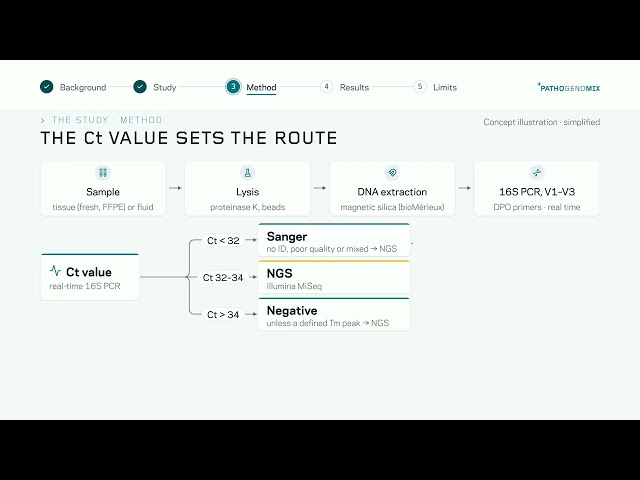
Ripseq Mixed is an online software tool for rapid bacterial identification, with focus on analyzing mixed clinical samples. Through the use of advanced algorithms, we remove the need for manual isolation and re-cultivation of colonies from poly-microbial samples prior to 16S rDNA sequencing. This makes direct sequencing relevant for a broader range of clinical samples, including abscesses and pleural fluids.
Ripseq Single
DNA target sequencing is the prevailing method for accurate identification of human pathogens. With the introduction of Ripseq Single and the already established Ripseq Mixed, Isentio now makes Ripseq software the complete package for DNA target sequence based identification.
Ripseq Mixed Examples
Ripseq Mixed is a computer program able to read and interpret mixed chromatograms containing up to three individual sequences (ref. JCM, Nov. 2009). Through the use of advanced algorithms we remove the need for culture and manual separation of the present bacteria prior to sequencing.
Ripseq Mixed handles InDels
Ripseq Mixed is an online application able to read and interpret mixed sequencing chromatograms through the use of advanced algorithms. The Ripseq Mixed module can automatically handle and identify indel copy variants in DNA sequences obtained from pure bacterial isolates.
Pathogenomix DPO Universal 16S Primer Protocol (Updated late 2017)
Pathogenomix Group Specific Primer Protocol
Do you have any questions?
We would love to hear from you
Whether you have a question, need more information about our services, or want to discuss a potential collaboration, our team is here to help.